Qubit vs Lightdash
Lightdash adds an analytics layer on top of your warehouse. Its definitions live in code, so your data team stays involved. Qubit also includes storage and an application built for everyday business questions.
- 140+ integrations
- Built-in data warehouse
- Recurring workflows
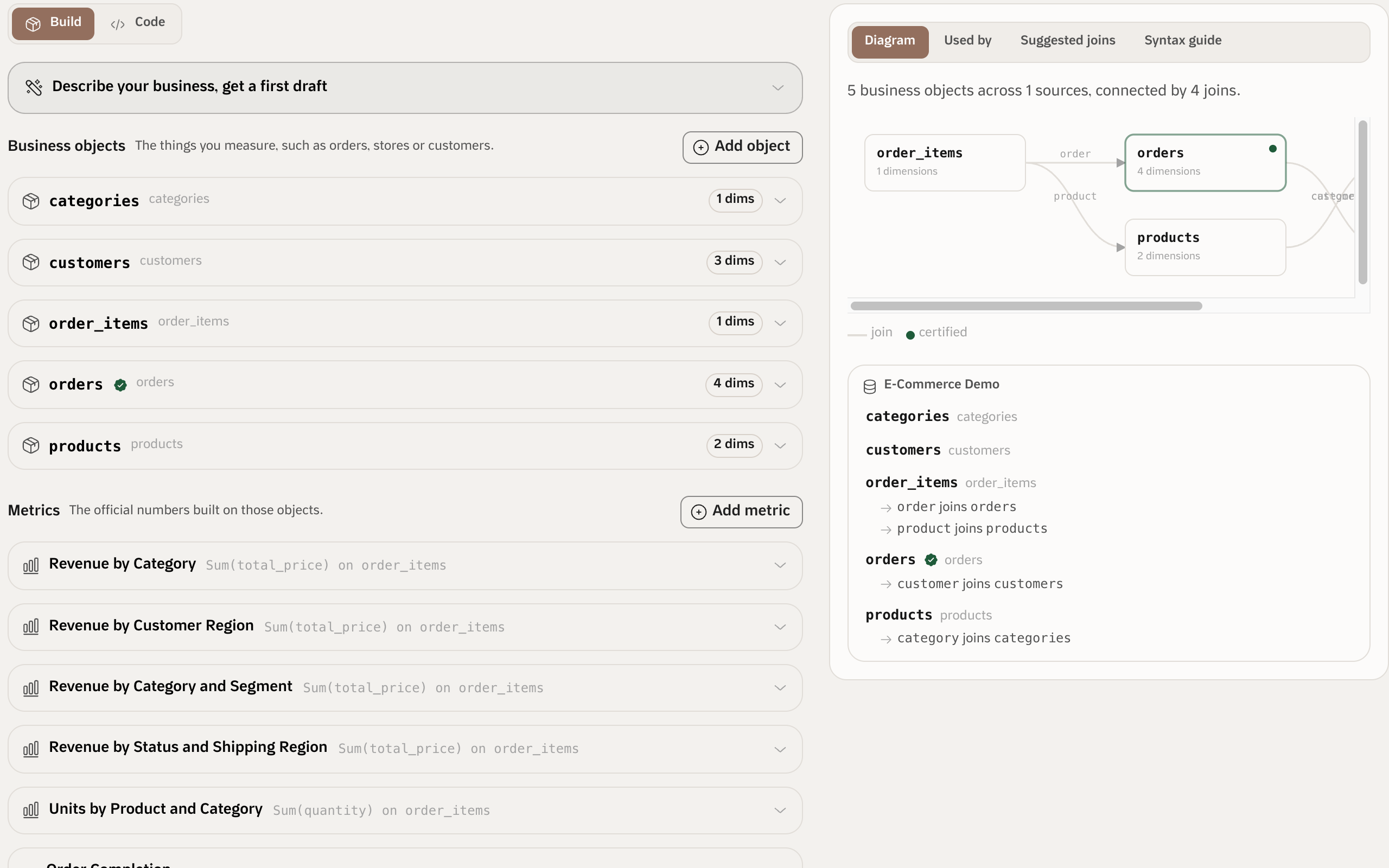
Start analyzing without running a data stack.
Lightdash’s AI makes asking questions easier. The warehouse and the code-defined metrics behind each answer still need an owner, which suits teams that have analytics engineers. Qubit includes source sync, storage, and analysis for teams that would rather not run those parts themselves.
Definitions still live in code
LightdashBusiness users can ask AI questions. Maintaining the shared definitions in dbt or Lightdash YAML still calls for a technical owner.
With QubitSet up metrics inside Qubit and use them for analysis in the same workspace.
The data platform is still yours to run
LightdashLightdash runs on your existing warehouse. Preparing data, running the warehouse, and changing models all happen outside the chat.
With QubitUse Qubit’s data store with supported-source sync and scheduled tasks.
Open source still needs hosting
LightdashSelf-hosting adds infrastructure and maintenance costs. On a cloud plan, your underlying warehouse and its usage still need a budget.
With QubitQubit plans include storage and analysis, with published limits for each.
Connecting sources, defining metrics, and setting permissions are part of setup in Qubit as well. Advanced access controls and usage limits depend on your plan.
Compare at a glance
- Available
- Needs setup or a paid upgrade
- Not built in
| What to compare |  Decision intelligence Decision intelligence |  LightdashAnalytics engineering LightdashAnalytics engineering |
|---|---|---|
| What the product covers | Storage, analysis, and workflows togetherChat, dashboards, monitoring, reports, and scheduled workflows on the same data. | Requires setupBusiness intelligence built around a code-defined semantic layer. |
| Your team’s workspace | Built for business teamsAsk questions, build dashboards, schedule reviews. | AvailableBI and AI analysis built for analytics engineers |
| Analysis without writing code | Ask business questions without writing SQLOnce sources, metrics, and access are configured, business teams can ask questions and follow up in plain language. | AvailableBusiness users explore and ask questions. The semantic layer is maintained as code, with technical ownership of definitions and warehouse setup. |
| Business context | Shared definitionsMetric definitions and data relationships that span all your sources. | AvailableShared semantic layer maintained as code |
| Built-in data warehouse | Qubit can be your data warehouseSync supported sources into Qubit’s data store, or query supported databases directly. | Not built inRuns on your existing warehouse, with a semantic layer maintained as code. |
| Source protection | Read-only analysis queriesAnalysis queries are checked before execution and blocked if they modify data. This also applies to administrators. | Requires setupQueries the connected warehouse through its configured connection. |
| Who can see your data | Control access down to rowsHigher plan requiredConfigure access to connections and datasets, with row filters applied to analysis queries. | AvailableRow and column rules apply through the shared context layer. |
| Audit & traceability | Review activity and report sourcesWorkspace activity logs, plus the SQL and data sources behind each generated report. | AvailableAudit logs and answers that can be traced to metrics and queries. |
| Setup & maintenance | Fewer services to assembleData sync, storage, analysis, and workflows in one platform that we host and run. | The data platform is still yours to runLightdash runs on your existing warehouse. Preparing data, running the warehouse, and changing models all happen outside the chat. |
| Costs beyond the subscription | Storage and analysis in your planEach plan sets limits for users, storage, and usage. Your source systems and any external services you choose are billed separately. | Open source still needs hostingSelf-hosting adds infrastructure and maintenance costs. On a cloud plan, your underlying warehouse and its usage still need a budget. |
| Published pricing (USD) | From $9/month for one userTeams from $99/month including 2 users, plus $15 per extra user up to the plan limit. Advanced access controls require a higher plan. See plans for full limits. | PricingOpen-source self-hosting is available. Contact Lightdash for a cloud quote; infrastructure and warehouse costs depend on your setup. |
Synced data is stored in Qubit. Advanced access controls, feature availability, and usage limits depend on your plan and setup.
Source: Lightdash documentationPrices checked 27 September 2026. Plans, included features, and taxes can vary. See Lightdash pricing and Qubit plans.
Comparison references
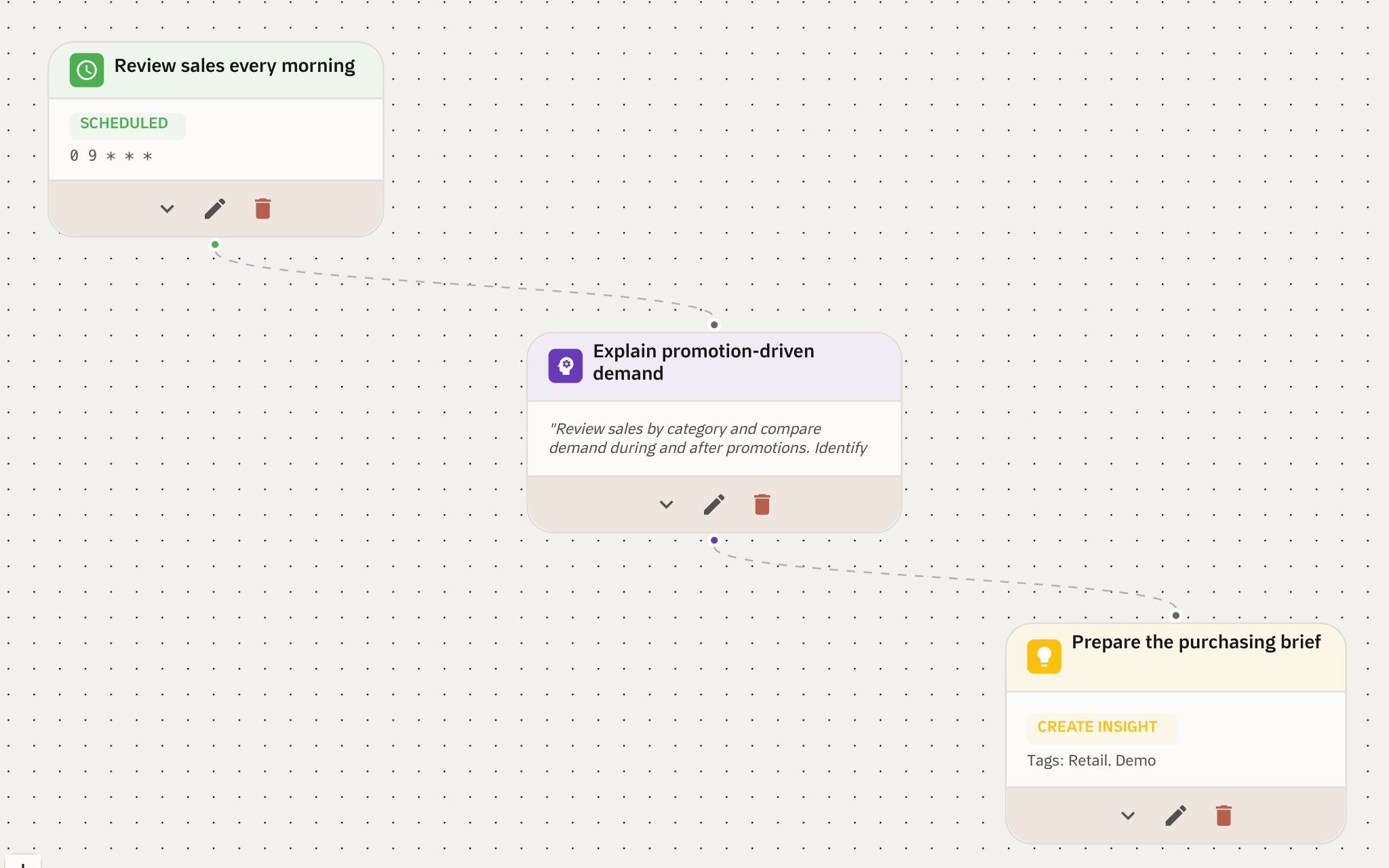
Your weekly analysis, already scheduled.
Turn a question your team asks every week into a scheduled review. Set when it runs, add the analysis step, and choose the output, such as a purchasing summary.
- Schedule the review your team repeats every week.
- Get the result as a report or summary the team can act on.
What a Qubit plan includes
- Everyday analysis
- Data chat, dashboards, shared metric definitions, scheduled workflows, and reports. Connection counts and usage limits depend on your plan.
- Automatic insights
- Qubit flags notable changes in your data, so you know where to look next.
- Embed, customize, and control
- Dashboard and agent embedding, your branding, custom and REST connectors, data permissions, row filters, member access review, and dedicated support.
See Qubit answer a question you already ask.
Connect a source and ask a question your team answers every week. See how Qubit handles the analysis, monitoring, and scheduled workflows.